Ghanaian Dealer’s "Chinese Car Business": 13 Units in the First Order, 50 Units a Month — What Did This African Buyer Find in Wuhan?
In discussions of African used-vehicle trade, we tend to focus on policy thresholds, compliance risks and vehicle age red lines. But on this continent, what truly gets Chinese used vehicles moving are the local African dealers who are rooted in the local market and willing to put in real money. Their way of doing business shows the competitiveness of Chinese vehicle sources in the African market more intuitively than any policy document.
Today we are sharing a real case: a buyer from Ghana, Akma, who has built a stable Chinese used-vehicle supply chain at the China (Guangzhou) Automobile Export Wholesale Base and gradually grown the business to an average of 50 units purchased per month.
A Ghanaian Buyer Doing "Fixed-Point Purchasing" in Wuhan
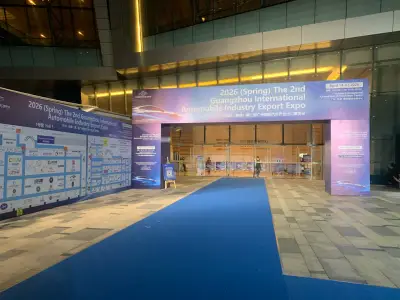
In the first half of 2026, a Ghanaian buyer came to Guangzhou, China. At first he only planned to visit the market and compare sources and quotes, but over the next half month he appeared at the China (Guangzhou) Automobile Export Wholesale Base almost every day, often working directly on site at the company, inspecting vehicles, checking documents and finalizing orders.
A salesperson said in an interview: "He comes to our company every day, sometimes working right here, and that month he locked in fifty or sixty vehicles."
This was not Akma’s first cooperation with this company. Since contact was established last year, Akma has largely kept up steady repeat purchases, with monthly purchases from this supplier holding steady at around 50 units.
Why Did This Ghanaian Buyer Make Wuhan His Core Procurement Base?
The core advantage lies in vehicle condition and overall procurement cost. Africa’s local automotive industry is weak, new-car import duties are high, and new-car prices rise sharply after arrival, making them unaffordable for ordinary families. The used vehicles exported from China are mostly compliant family models in the 100,000-yuan class domestically, with guaranteed condition and complete paperwork, precisely filling this huge gap in local market demand.
Akma is not an isolated case. The China (Guangzhou) Automobile Export Wholesale Base has also connected with other Ghanaian buyer clients. These signed a first order of 13 vehicles after nearly two months of repeated communication and vehicle condition verification. The company head recalls that the first order included a blue sedan that had sat in a domestic warehouse for a long time without selling; unexpectedly, this model proved very popular with Ghanaian clients.
The Underlying Logic Behind African Dealers’ Continued Ordering
African buyers’ continued demand for Chinese used vehicles rests on a clear, workable business model.
The first export order of the China (Guangzhou) Automobile Export Wholesale Base involved a customer purchasing 13 vehicles at once; the batch as a whole earned more than 100,000 yuan in profit, which also strengthened the team’s commitment to deepening used-vehicle exports to Africa. Entering 2026, the business grew rapidly, with first-quarter shipments already exceeding the whole of 2025.
Behind these numbers is the choice African dealers made after repeated calculations: with the same budget, in China they can obtain sources that are newer in year and better in condition; at the same condition level, the procurement cost of Chinese used vehicles has an advantage over traditional Japanese used vehicles. Down at the end market, local consumers can buy passenger cars with better equipment and appearance within an affordable budget.
This Ghanaian buyer’s case offers us a new perspective beyond policy interpretation.
The dividends of the African market do not come from low-price dumping. Akma’s stable orders of 50 units per month are built on transparent vehicle condition, a stable delivery process and timely, responsive communication. His willingness to keep travelling back and forth to Wuhan and to stay on site inspecting vehicles essentially reflects his recognition of the long-term value of this supply chain.
African local dealers are becoming the key bridge connecting Chinese vehicle sources and the end market. They best understand local consumer preferences, mainstream price points and premium configurations. When domestic export enterprises serve these stable buyers well, it is equivalent to obtaining a "living map" for entering the local market.
A window in the West African left-hand-drive market genuinely exists. The fact that Guangzhou’s export orders in this batch flow concentratedly to left-hand-drive countries such as Ghana and Nigeria is no coincidence: the steering orientation naturally matches the existing used-vehicle stock in China, making it a very good entry point for China’s used-vehicle exports. Markets such as Kenya, which have strict original right-hand-drive requirements and continuously tightening regulation, instead require compliant vehicle sources and a more suitable landing path.
In the African used-vehicle trade chain, policies may be adjusted at any time and vehicle sources are the basic guarantee, but what truly keeps business rolling is exactly Akma-style dealers who are deeply rooted locally. Their real repeat orders explain the true market position of Chinese used vehicles in Africa better than any industry analysis report.