
China’s Auto Exports: From Global Volume Leader to High-Quality Global Player
n just a few years, China’s auto export industry has shifted from a global follower to a leader, reshaping the entire global automotive competitive landscape. What started as occasional low-cost vehicle shipments has grown into a full-scale global expansion, powered by advanced new energy technology, a fully integrated supply chain and strategic localisation worldwide. Having secured its position as the world’s top auto exporter, China’s auto sector is now moving from rapid volume growth to sust
1. Record-Breaking Growth: Leading Global Auto Exports With Rising Volume and Value
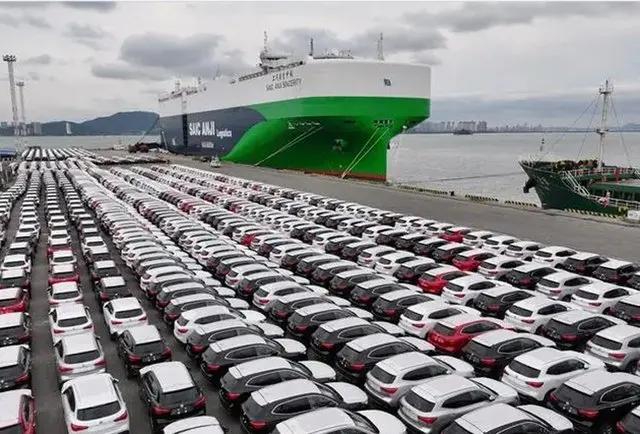
The surge in China’s auto exports is one of the most notable manufacturing success stories globally this decade. In 2020, annual exports stood at just under 1 million units, a modest number compared to long-time leaders Japan and Germany. Since 2023, however, China has claimed and held the title of the world’s largest auto exporter, entering a phase of explosive growth.
Latest industry data confirms sustained strong momentum: China exported 8.32 million vehicles in 2025, up 30% year-on-year and hitting a new record. Growth continued into 2026, with 1.352 million units exported in the first two months (a 48.4% year-on-year rise), and February 2026 monthly exports exceeding 670,000 units, surging over 50% year-on-year. Equally important, export quality is rising: the average export price reached $18,200 in 2025, a 15.7% year-on-year increase, leaving behind the old label of low-cost, low-value exports.
Passenger vehicles make up over 80% of total exports, remaining the core segment, while commercial vehicle exports — especially new energy commercial models — are growing steadily. New energy vehicles (NEVs) are the undisputed growth driver: 3.43 million NEVs were exported in 2025, jumping 70% year-on-year. In the first two months of 2026 alone, NEV exports hit 583,000 units, more than doubling year-on-year and accounting for over 40% of total auto exports, cementing their role as the flagship of China’s auto global expansion.
2. Core Drivers: Integrated Industrial Chains and Technological Innovation
China’s auto export boom is no accident — it stems from decades of industrial accumulation, targeted tech breakthroughs and proactive global strategy. The country’s competitive edge has evolved from basic cost advantages to a full, end-to-end industrial strength that few countries can replicate.
A Complete, Resilient Industrial Supply Chain
China has the world’s most complete automotive supply chain, covering raw material extraction (including lithium and rare earths for batteries), core component manufacturing, vehicle assembly, logistics and after-sales service. This closed-loop system dominates the NEV sector: China produces over 70% of the world’s lithium-ion batteries, with full self-sufficiency in electric motors, electronic controls and other key parts. This integration cuts production costs, ensures supply chain stability and enables fast responses to global demand changes — a unique advantage for large-scale, consistent exports.
Leadership in Electrification and Smart Mobility
As the global auto industry shifts to electrification and smart mobility, Chinese carmakers have leapfrogged traditional barriers in the gasoline vehicle market. Leading brands excel in battery-electric, plug-in hybrid and range-extender technologies, with strong performance in range, safety and charging efficiency. They also lead in smart cockpits, autonomous driving features and connected car tech, offering more accessible, user-friendly innovation than established European, Japanese and Korean rivals. This tech edge has won over consumers in both mature and emerging markets.
From Product Exports to Localised Ecosystem Output
China’s auto “going global” strategy is no longer limited to finished vehicle exports. Top manufacturers including BYD, Chery, SAIC Motor and Great Wall Motors now prioritise localisation as a long-term plan. They have built overseas factories, set up regional R&D centers, expanded after-sales and charging networks, and formed joint ventures with local partners across Latin America, Europe, Southeast Asia and the Middle East. This model reduces trade barrier risks, creates local jobs and integrates Chinese auto technology and services into regional industries, shifting from product exports to full industrial ecosystem output.
3. Global Market Footprint: Diversified Expansion Across Regions
China’s auto exports have moved past single-market reliance, building a diversified global sales network with tailored strategies for different regions, regulations and consumer needs.
Latin America is China’s largest auto export region. Mexico is the top single destination, with over 620,000 units exported in 2025, and also acts as a strategic gateway to North America. Chinese brands have also gained significant market share in Brazil and Argentina via local production, becoming mainstream choices for local buyers. Europe is a key market for high-end breakthrough: Chinese brands sold 810,000 vehicles there in 2025, capturing over 6% of the market, with some models priced above $40,000 — proving they can compete with premium European brands on quality and technology.
The Middle East is a high-margin market, with strong demand for premium SUVs and NEVs in Saudi Arabia, the UAE and other Gulf countries. Southeast Asia, with its large population and rising car ownership, is a focus for local manufacturing, letting Chinese brands compete directly with established Japanese and Korean players. Russia, Australia and Central Asian markets complete a balanced global footprint, lowering regional market risks.
4. Navigating Challenges and Embracing Long-Term Opportunities
As China’s auto exports enter a deeper globalisation phase, the industry faces growing external pressures and internal gaps, even with strong long-term growth prospects. The next step requires shifting from volume expansion to quality-focused, sustainable global development.
Key Challenges in the Global Market
First, rising trade protectionism is a major barrier. Many countries and regions have imposed higher tariffs, strict technical standards, carbon footprint rules and anti-dumping/countervailing investigations targeting Chinese NEVs, raising export costs and compliance complexity. Second, Chinese brands still lag behind legacy automakers in global brand premium and recognition; despite sharp quality improvements, they need to build long-term trust and emotional connections with global consumers. Third, uneven localisation capabilities limit growth: some brands focus only on sales instead of building reliable after-sales networks, parts supply chains, local teams and CSR programs. Finally, excessive domestic competition has spilled overseas, with occasional price wars damaging the overall image of Chinese auto brands globally.
Unmatched Long-Term Opportunities
Despite these challenges, huge growth potential remains. The global shift to electric mobility and rising vehicle demand in emerging markets create vast opportunities. Global supply chain restructuring has further highlighted the resilience of China’s auto industry, and ongoing innovation in smart and connected vehicles will keep strengthening product competitiveness. As local production and compliance capabilities improve, Chinese automakers can gradually overcome trade barriers and fully integrate into the global auto ecosystem. Industry analysts predict China’s annual auto exports will top 10 million units in the coming years, moving from a major auto exporter to a truly competitive global auto power.
5. The Path Forward: Sustainable Globalisation for Long-Term Success
To maintain global leadership, China’s auto industry must prioritise quality over quantity, brand building over short-term sales, and mutual benefit over one-sided expansion. This means deepening localisation in key markets, following international regulatory and environmental standards, investing in brand storytelling and consumer engagement, and building partnerships with local suppliers, dealers and communities.
China’s auto export journey is more than an industrial success — it shows the evolution of China’s manufacturing from “Made in China” to “Created in China”. Chinese auto brands are no longer just global participants; they are shaping the future of mobility. With a focus on innovation, sustainability and local integration, China’s auto sector is set to build a lasting, respected global presence for years to come.