BYD aims to dominate the L4 high-level intelligent driving market: breaking through technological barriers + implementing mass production, reshaping the landscape of the autonomous driving industry
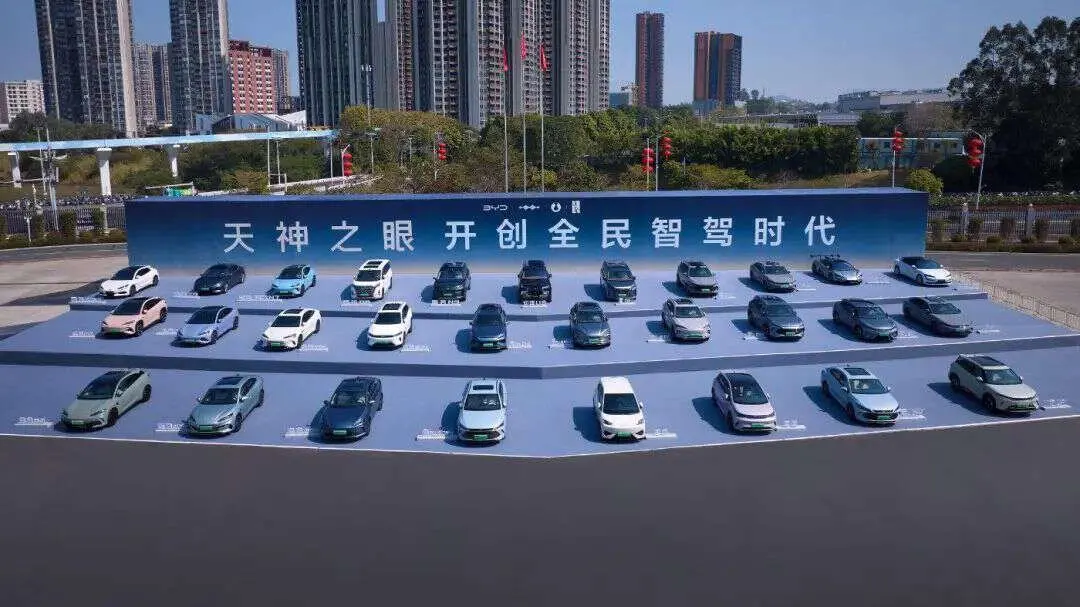
At the critical juncture when the global autonomous driving industry is entering the high-level mass production phase, Level 4 autonomous driving has already moved from conceptual imagination to practical implementation. BYD, leveraging its self-developed capabilities across the entire industry chain and top-tier ecosystem collaboration, has become a core leader in this technological competition. In March 2026, BYD officially announced its deep collaboration at the NVIDIA GTC Global Developer Conference, fully committing to the mass production of Level 4 autonomous driving. With its triple advantages of self-developed algorithms, top-tier computing power platforms, and large-scale mass production capabilities, it has completely broken the industry bottleneck of "easy research and development, difficult implementation" in high-level intelligent driving. This not only establishes its leading position in the intelligent driving field but also propels Chinese automakers to make a comprehensive leap from fuel vehicle pursuers and new energy leaders to global leaders in autonomous driving technology.
1. Strong collaboration without losing dominance: The core technical architecture of BYD's L4 intelligent driving. BYD's promotion of L4 autonomous driving this time is not a mere "OEM cooperation" involving the procurement of external technology. Instead, it adheres to the core model of leveraging underlying computing power + independently developing upper-level algorithms + leading vehicle engineering, firmly maintaining its technical discourse power and mass production dominance. This is also the key difference between BYD and most other automakers.
At the core hardware level, BYD is fully equipped with the NVIDIA DRIVE Hyperion 10 autonomous driving platform, featuring dual Thor flagship chips with a total computing power exceeding 2000 TOPS. It possesses superior real-time AI large model inference capabilities, enabling it to easily handle millisecond-level decision-making in complex urban roads and unexpected road conditions, providing ample computing power support for L4-level full-scenario autonomous driving. Additionally, it is equipped with the industry's top perception suite, consisting of 14 high-definition cameras, 3 lidar sensors, 9 millimeter-wave radar sensors, and 20 ultrasonic radar sensors that work together to achieve 360-degree all-around perception, completely eliminating blind spots in driving vision. Even in complex scenarios such as congested roads, unmarked intersections, and non-motorized vehicle crossings, it can accurately identify and respond with ease.
At the software algorithm level, BYD adheres to core self-research and development. Based on its massive driving data from millions of new energy vehicles, it iteratively upgrades the DiPilot intelligent driving system, deeply integrates its self-developed end-to-end intelligent driving large model, and achieves perfect compatibility with NVIDIA platform algorithms. Different from the traditional segmented logic of "perception-decision-execution" in intelligent driving, BYD's L4 system adopts an end-to-end direct connection architecture, skipping redundant intermediate links, significantly reducing decision-making latency, minimizing ineffective sudden braking and acceleration, and providing a driving experience closer to that of experienced human drivers. At the same time, it completely eliminates excessive dependence on high-precision maps, adapts to more cities and more complex road conditions, and achieves true full-domain high-level autonomous driving.
Summary of core advantages: BYD holds the discourse power in the entire industry chain of complete vehicle manufacturing, three-electricity system, and chassis tuning. Coupled with top computing power and self-developed algorithms, it not only addresses the technical shortcomings of L4 intelligent driving, but also avoids becoming a vassal of hardware suppliers, leading the entire process of technology research and development, adaptation verification, and mass production implementation.
II. Clarifying the implementation timeline: Compared to the vague layouts of most enterprises in the industry, which only talk about technology but not implementation, BYD has formulated a clear and feasible promotion plan for L4 autonomous driving, achieving synchronous acceleration of technological research and development and commercial implementation, and completely bidding farewell to the dilemma of high-level autonomous driving being a "castle in the air".
• 2026: Complete full-scenario technology verification. Within the year, complete full coverage testing on complex roads, highways, and urban ring roads in first-tier cities in China, optimize algorithms for handling extreme weather and unexpected road conditions, hone system stability through extensive real-vehicle testing, make comprehensive preparations for mass production delivery, and simultaneously complete hardware pre-installation and software adaptation for high-end models.
• 2027: First-tier cities will take the lead in commercial deployment. The first batch of mass-produced vehicles equipped with L4 autonomous driving technology will be officially delivered, covering high-end BYD models such as Han, Tang, Denza, and Y仰望. Meanwhile, pilot operations of L4 Robotaxi self-driving taxis will be launched in core cities such as Shenzhen and Shanghai, achieving normalized travel services without manual takeover, and completing the closed loop from technology verification to commercial operation.
•2028 and beyond: Global large-scale popularization. Gradually extend L4 intelligent driving capabilities to mainstream price-point models, driving down technology costs; expand pilot projects to 28 core cities in China, and simultaneously enter overseas markets. Leveraging BYD's global production capacity layout, promote the implementation of L4 intelligent driving in Europe, Southeast Asia, Latin America, and other regions, building a globally leading autonomous driving ecosystem.
This landing pace fully relies on BYD's world-leading production and sales scale of new energy vehicles, leveraging its million-level mass production capacity to dilute technical costs. It breaks the industry convention that high-end intelligent driving "only belongs to luxury cars", making L4-level autonomous driving move from a niche high-end configuration to mass popularization. This is also BYD's unique advantage as the industry leader.
III. Implementing L4 Intelligent Driving: More than Just a Technical Upgrade, It's a Dimensional Upgrade of BYD's Ecological Strategy. BYD's push into L4 autonomous driving is not merely a single technological iteration, but a crucial component of its comprehensive ecosystem strategy encompassing complete vehicles, energy, intelligence, and mobility, further reinforcing its dominant position in the global new energy industry.
For users, L4 autonomous driving completely frees both hands and feet, enabling fully autonomous driving for both city commuting and long-distance travel. It addresses core pain points such as driving fatigue on congested roads and safety during long journeys. Coupled with BYD's 9-minute super flash charging technology, it offers a new travel experience of "fast charging and worry-free driving", completely reshaping the way users travel.
For the industry, the mass production of L4 intelligent driving led by BYD has propelled the global autonomous driving industry into a new stage dominated by China. Previously, the high-end intelligent driving track was mostly occupied by European and American technology companies and automobile enterprises. However, BYD, leveraging its full industrial chain advantages and large-scale implementation capabilities, has established the industry standard for mass production-level L4 intelligent driving, driving the coordinated development of upstream and downstream industries in the domestic intelligent driving industry chain, and pushing Chinese intelligent driving technology to the center stage of the global stage.
In terms of globalization strategy, Level 4 (L4) intelligent driving has become the core competitiveness for BYD to break through the overseas high-end market. In mainstream markets such as Europe and North America, advanced autonomous driving has become a core indicator for consumers when choosing car models. After adapting BYD's L4 technology to local compliance requirements, it will quickly open up the high-end market gap, breaking away from the model of solely relying on cost-effectiveness to expand overseas, and achieving dual improvement in brand value and market share.
IV. Industry Landscape Reshaping: BYD Locks in Global Leadership with L4 Intelligent Driving The current competition in the global automotive industry has long shifted from new energy to the ultimate race of intelligentization and autonomous driving. L4-level autonomous driving, as the ceiling of the industry, is a comprehensive reflection of a car company's core technological strength, industrial chain integration capabilities, and large-scale mass production capabilities.
BYD, leveraging its profound accumulation in the new energy field, completed its electrification transformation ahead of schedule. Now, it has preemptively secured the dominance in the mass production of L4 intelligent driving, forming a comprehensive advantage of "underpinned by three-electricity technology + empowered by super fast charging + leading in L4 intelligent driving". Unlike other automakers that focus on single technological breakthroughs, BYD adopts a route of full-stack self-research + ecological collaboration. This approach not only allows it to maintain autonomy in core technologies but also enables rapid large-scale implementation. This is the core logic behind its leading position in the industry.
As the mass production of L4-level autonomous driving vehicles approaches in 2027, BYD will completely widen the gap between itself and its competitors in the industry, upgrading from the global champion in new energy vehicle sales to the absolute leader in the global smart car and autonomous driving industries. And the Chinese automotive industry will also leverage BYD's technological breakthroughs to firmly grasp the discourse and dominance in the global automotive industry's intelligent transformation.
From blade batteries, DM-i hybrid power, to super flash charging, and now to L4-level autonomous driving, BYD has always taken technological innovation as its core driving force, gradually achieving the leap from catching up, to keeping pace, and now to leading the way. This time, leading the mass production of L4 high-level intelligent driving not only marks the further expansion of BYD's own technological landscape, but also signifies that Chinese automobile enterprises are officially leading the development of the global autonomous driving industry. A new era of intelligent travel, defined by Chinese technology, is accelerating towards us.